Category: Christmas


Christmas

December 24th, 2012 — 2:15pm

forest-snow-winter-spruce-tree-300x199

Syncretism: a term that means the combining or reconciling of opposing practices and principles. It’s most commonly used in a religious or philosophical context, and as with Easter, Christmas too is syncretic in its origins: a pagan celebration whose provenance long predates Christ’s birth but which eventually made its way into the Christian mainstream.

As a matter of fact, it wasn’t until approximately 300 years after the death of Christ that the Roman church began observing Christmas, and it wasn’t until the 5th century AD that the church officially mandated that Christmas be observed by Christians throughout the world “as a festival honoring the birth of Jesus Christ” (though, let it be noted, Christ was not born in winter but most likely fall).

Not all Christians have agreed with this official Christmas mandate: in 1659, for instance, the Puritans of New England, about whom I’ve written before, banned Christmas by law throughout the Massachusetts Bay Colony, calling it “heathen, papist idolatry,” and even went so far as to deem its observance a crime punishable by imprisonment. It was until 1856 that in Boston people stopped working on Christmas.

What follows are some fascinating facts about the long and little-known history of Christmas.

From The Encyclopedia Americana:

Christmas was not observed in the first centuries of the Christian church, since the Christian usage in general was to celebrate the death of remarkable persons rather than their birth…a feast was established in memory of this event [Christ's birth] in the 4th century. In the 5th century the Western church ordered the feast to be celebrated on the day of the Mithraic rites of the birth of the sun and at the close of the Saturnalia, as no certain knowledge of the day of Christ’s birth existed.

And from the 1911 Catholic Encyclopedia:

Christmas was not among the earliest festivals of the Church. The first evidence of the feast is from Egypt.

From The Buffalo News, November 22, 1984:

The earliest reference to Christmas being marked on Dec. 25 comes from the second century after Jesus’ birth. It is considered likely the first Christmas celebrations were in reaction to the Roman Saturnalia, a harvest festival that marked the winter solstice–the return of the sun–and honored Saturn, the god of sowing. Saturnalia was a rowdy time, much opposed by the more austere leaders among the still-minority Christian sect. Christmas developed, one scholar says, as a means of replacing worship of the sun with worship of the Son. By 529 A.D., after Christianity had become the official state religion of the Roman Empire, Emperor Justinian made Christmas a civic holiday. The celebration of Christmas reached its peak–some would say its worst moments–in the medieval period when it became a time for conspicuous consumption and unequaled revelry.

And here’s a passage from the New Schaff-Herzog Encyclopedia of Religious Knowledge:

How much the date of the festival depended upon the pagan Brumalia (December 25) following the Saturnalia (Dec. 17-24), and celebrating the shortest day of the year and the ‘new sun’…cannot be accurately determined. The pagan Saturnalia and Brumalia were too deeply entrenched in popular custom to be set aside by Christian influence…The pagan festival with its riot and merry-making was so popular that Christians were glad of an excuse to continue its celebration with little change in spirit and in manner. Christian preachers of the West and the Near East protested against the unseemly frivolity with which Christ’s birthday was celebrated, while Christians of Mesopotamia accused their Western brethren of idolatry and sun worship for adopting as Christian this pagan festival.

Finally, from the Encyclopedia Britannica:

Christmas was not among the earliest festivals of the church…. Certain Latins, as early as 354, may have transferred the birthday from January 6th to December 25, which was then a Mithraic feast…or birthday of the unconquered SUN…The Syrians and Armenians, who clung to January 6th, accused the Romans of sun worship and idolatry, contending…that the feast of December 25th, had been invented by disciples of Cerinthus.

The Democrat and Chronicle, of Rochester, New York, in December 1984 wrote:

The Roman festival of Saturnalia, Dec. 17-24, moved citizens to decorate their homes with greens and lights and give gifts to children and the poor. The Dec. 25 festival of natalis solis invicti, the birth of the unconquered sun, was decreed by the emperor Aurelian in A.D. 274 as a Winter Solstice celebration, and sometime (later)…was Christianized as a date to celebrate the birth of the Son of Light.

And in December of 1989, Dr. William Gutsch, chairman of the American Museum of Natural History, said, in the Westchester, New York, newspaper:

The early Romans were not celebrating Christmas but rather a pagan feast called the Saturnalia. It occurred each year around the beginning of winter, or the winter solstice. This was the time when the sun had taken its lowest path across the sky and the days were beginning to lengthen, thus assuring another season of growth.

If many of the trappings of the Saturnalia, however, seem to parallel what so many of us do today, we can see where we borrowed…our holiday traditions. And indeed, it has been suggested that while Christ was most likely not born in late December, the early Christians — then still an outlawed sect — moved Christmas to the time of the Saturnalia to draw as little attention as possible to themselves while they celebrated their own holiday.

Lastly, from a Christian who does not like Christmas, and from whom many of these quotes have been culled:

The Saturnalia, of course, celebrated Saturn–the fire god. Saturn was the god of sowing (planting) because heat from the sun was required to allow for planting and growth of crops. He was also worshipped [sic] in this dead-of-winter festival so that he would come back (he was the “sun”) and warm the earth again so that spring planting could occur.

In an Easter post I once wrote, I quoted the genius priest-poet Gerard Hopkins, in a poem he wrote about spring. And in response to the passage just cited above, it seems relevant to recall those same words that Hopkins’s wrote:

What is spring?
Growth in everything.


Flesh and fleece, fur and feather,
Grass and greenworld all together;
Star-eyed strawberry-breasted
Throstle above her nested

Cluster of bugle-blue eggs thin
Forms and warms the life within;
And bird and blossom swell
In sod and sheath or shell.

All things rising, all things sizing
Mary sees, sympathizing
With that world of good,
Nature’s motherhood.

(Gerard Manly Hopkins, “May Magnificat”)

Winter. Death. Rebirth. The lengthening days. Life.

That, in part, is what Christmas represents.

But it also represents something more, something equally beautiful, and something much wider than the laws laid down by any one particular custom or creed: it represents peace on earth and good will towards women and men.


3 comments » | Christmas

The Origins of Christmas

December 25th, 2011 — 2:45am

Syncretism is a term that means the combining or reconciling of opposing practices and principles. It’s most commonly used in a religious or philosophical context, and as with Easter, Christmas too is syncretic in its origins: a pagan celebration whose provenance long predates Christ’s birth but which eventually made its way into the Christian mainstream.

As a matter of fact, it wasn’t until approximately 300 years after the death of Christ that the Roman church began observing Christmas, and it wasn’t until the 5th century AD that the church officially mandated that Christmas be observed by Christians throughout the world “as a festival honoring the birth of Jesus Christ” — though, let it be noted, Christ was not born in winter but most likely fall. (Not all Christians have agreed with this official Christmas mandate: in 1659, for instance, the Puritans of New England, about whom I’ve written before, banned Christmas by law throughout the Massachusetts Bay Colony, calling it “heathen, papist idolatry,” and even went so far as to deem its observance a crime punishable by imprisonment. It was until 1856 that in Boston people stopped working on Christmas.)

What follows are some fascinating facts about the long and little-known history of Christmas. From The Encyclopedia Americana:

Christmas was not observed in the first centuries of the Christian church, since the Christian usage in general was to celebrate the death of remarkable persons rather than their birth…a feast was established in memory of this event [Christ's birth] in the 4th century. In the 5th century the Western church ordered the feast to be celebrated on the day of the Mithraic rites of the birth of the sun and at the close of the Saturnalia, as no certain knowledge of the day of Christ’s birth existed.

And from the 1911 Catholic Encyclopedia:

Christmas was not among the earliest festivals of the Church. The first evidence of the feast is from Egypt.

From The Buffalo News, November 22, 1984:

The earliest reference to Christmas being marked on Dec. 25 comes from the second century after Jesus’ birth. It is considered likely the first Christmas celebrations were in reaction to the Roman Saturnalia, a harvest festival that marked the winter solstice–the return of the sun–and honored Saturn, the god of sowing. Saturnalia was a rowdy time, much opposed by the more austere leaders among the still-minority Christian sect. Christmas developed, one scholar says, as a means of replacing worship of the sun with worship of the Son. By 529 A.D., after Christianity had become the official state religion of the Roman Empire, Emperor Justinian made Christmas a civic holiday. The celebration of Christmas reached its peak–some would say its worst moments–in the medieval period when it became a time for conspicuous consumption and unequaled revelry.

And here’s a passage from the New Schaff-Herzog Encyclopedia of Religious Knowledge:

How much the date of the festival depended upon the pagan Brumalia (December 25) following the Saturnalia (Dec. 17-24), and celebrating the shortest day of the year and the ‘new sun’…cannot be accurately determined. The pagan Saturnalia and Brumalia were too deeply entrenched in popular custom to be set aside by Christian influence…The pagan festival with its riot and merry-making was so popular that Christians were glad of an excuse to continue its celebration with little change in spirit and in manner. Christian preachers of the West and the Near East protested against the unseemly frivolity with which Christ’s birthday was celebrated, while Christians of Mesopotamia accused their Western brethren of idolatry and sun worship for adopting as Christian this pagan festival.

Finally, from the Encyclopedia Britannica:

Christmas was not among the earliest festivals of the church…. Certain Latins, as early as 354, may have transferred the birthday from January 6th to December 25, which was then a Mithraic feast…or birthday of the unconquered SUN…The Syrians and Armenians, who clung to January 6th, accused the Romans of sun worship and idolatry, contending…that the feast of December 25th, had been invented by disciples of Cerinthus.

The Democrat and Chronicle, of Rochester, New York, in December 1984 wrote:

The Roman festival of Saturnalia, Dec. 17-24, moved citizens to decorate their homes with greens and lights and give gifts to children and the poor. The Dec. 25 festival of natalis solis invicti, the birth of the unconquered sun, was decreed by the emperor Aurelian in A.D. 274 as a Winter Solstice celebration, and sometime (later)…was Christianized as a date to celebrate the birth of the Son of Light.

And in December of 1989, Dr. William Gutsch, chairman of the American Museum of Natural History, said, in the Westchester, New York, newspaper:

The early Romans were not celebrating Christmas but rather a pagan feast called the Saturnalia. It occurred each year around the beginning of winter, or the winter solstice. This was the time when the sun had taken its lowest path across the sky and the days were beginning to lengthen, thus assuring another season of growth.

If many of the trappings of the Saturnalia, however, seem to parallel what so many of us do today, we can see where we borrowed…our holiday traditions. And indeed, it has been suggested that while Christ was most likely not born in late December, the early Christians — then still an outlawed sect–moved Christmas to the time of the Saturnalia to draw as little attention as possible to themselves while they celebrated their own holiday.

Lastly, from a Christian who does not like Christmas, and from whom many of these quotes have been culled:

The Saturnalia, of course, celebrated Saturn–the fire god. Saturn was the god of sowing (planting) because heat from the sun was required to allow for planting and growth of crops. He was also worshipped [sic] in this dead-of-winter festival so that he would come back (he was the “sun”) and warm the earth again so that spring planting could occur.

In an Easter post I once wrote, I quoted the genius priest-poet Gerard Hopkins, in a poem he wrote about spring. And in response to the passage just cited above, it seems relevant to recall those same words that Hopkins’s wrote:

What is spring?
Growth in everything.


Flesh and fleece, fur and feather,
Grass and greenworld all together;
Star-eyed strawberry-breasted
Throstle above her nested

Cluster of bugle-blue eggs thin
Forms and warms the life within;
And bird and blossom swell
In sod and sheath or shell.

All things rising, all things sizing
Mary sees, sympathizing
With that world of good,
Nature’s motherhood.

(Gerard Manly Hopkins, “May Magnificat”)

Winter. Death. Rebirth. The lengthening days. Life.

That, in part, is what Christmas represents.

But it also represents something more, something equally beautiful, and something much wider than the laws laid down by any one particular custom or creed: it represents peace on earth and good will towards women and men.


2 comments » | Christmas

Greatest Christmas Song Evuh: Fairytale Of New York

December 25th, 2010 — 3:15pm

Written and popularized by Jem Finer and Shane MacGowan — formerly of The Pogues — and featuring the mellifluous vocals of the late British singer Kirsty MacColl, who, in December of 2000, was killed in a mysterious boating accident in Mexico, “Fairytale of New York” was released as a single in 1987, and despite lyrics almost as controversial as singer Shane MacGowan’s teeth, the song went stratospheric: voted best Christmas tune of all-time three years running — 2004, 2005, and 2006 in polls conducted by VH1 — and 27th greatest song NEVER to reach #1 in the UK, the BBC Radio also voted it the 84th greatest song of all-time.

Drunken Shane MacGowan and The Pogues are of course inimitable and brilliant, but the following poppy punk-rock version, by No Use For A Name, is a real toe-tapper too:


5 comments » | Christmas

Christmas And Its Origins

December 24th, 2010 — 3:03pm

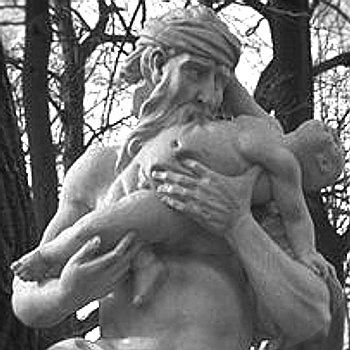
Saturn or Saint Nick?

Syncretism is a word that means combining or reconciling opposing practices and principles. It is most commonly used in a religious or philosophical context, and as with Easter, Christmas too is syncretic in its origins: a pagan celebration whose provenance long predates Christ’s birth, but which eventually made its way into the Christian mainstream.

In fact, it wasn’t until approximately 300 years after the death of Christ that the Roman church began observing Christmas, and it wasn’t until the 5th century AD that the church officially mandated that Christmas be observed by Christians throughout the world as a festival honoring the birth of Jesus Christ (though Christ was not born in winter but probably fall. And just incidentally, not all Christians have agreed with this official Christmas mandate. In 1659, for instance, the Puritans of New England, about whom we’ve recently written, banned Christmas by law throughout the Massachusetts Bay Colony, calling it “heathen, papist idolatry,” and they even went so far as to deem its observance a crime punishable by imprisonment. It wasn’t until 1856 that in Boston people stopped working on Christmas.)

What follows are some fascinating facts about the long and little-known history of Christmas. From The Encyclopedia Americana:

Christmas was not observed in the first centuries of the Christian church, since the Christian usage in general was to celebrate the death of remarkable persons rather than their birth…a feast was established in memory of this event [Christ’s birth] in the 4th century. In the 5th century the Western church ordered the feast to be celebrated on the day of the Mithraic rites of the birth of the sun and at the close of the Saturnalia, as no certain knowledge of the day of Christ’s birth existed.

And from the 1911 Catholic Encyclopedia:

“Christmas was not among the earliest festivals of the Church. The first evidence of the feast is from Egypt.”

From The Buffalo News, November 22, 1984:

The earliest reference to Christmas being marked on Dec. 25 comes from the second century after Jesus’ birth. It is considered likely the first Christmas celebrations were in reaction to the Roman Saturnalia, a harvest festival that marked the winter solstice—the return of the sun—and honored Saturn, the god of sowing. Saturnalia was a rowdy time, much opposed by the more austere leaders among the still-minority Christian sect. Christmas developed, one scholar says, as a means of replacing worship of the sun with worship of the Son. By 529 A.D., after Christianity had become the official state religion of the Roman Empire, Emperor Justinian made Christmas a civic holiday. The celebration of Christmas reached its peak—some would say its worst moments—in the medieval period when it became a time for conspicuous consumption and unequaled revelry.

And here’s a passage from the New Schaff-Herzog Encyclopedia of Religious Knowledge:

How much the date of the festival depended upon the pagan Brumalia (December 25) following the Saturnalia (Dec. 17-24), and celebrating the shortest day of the year and the ‘new sun’…cannot be accurately determined. The pagan Saturnalia and Brumalia were too deeply entrenched in popular custom to be set aside by Christian influence…The pagan festival with its riot and merry-making was so popular that Christians were glad of an excuse to continue its celebration with little change in spirit and in manner. Christian preachers of the West and the Near East protested against the unseemly frivolity with which Christ’s birthday was celebrated, while Christians of Mesopotamia accused their Western brethren of idolatry and sun worship for adopting as Christian this pagan festival.

Finally, from The Encyclopedia Britannica:

Christmas was not among the earliest festivals of the church…. Certain Latins, as early as 354, may have transferred the birthday from January 6th to December 25, which was then a Mithraic feast…or birthday of the unconquered SUN…The Syrians and Armenians, who clung to January 6th, accused the Romans of sun worship and idolatry, contending…that the feast of December 25th, had been invented by disciples of Cerinthus.

The Democrat and Chronicle, of Rochester, New York, in December 1984 wrote:

The Roman festival of Saturnalia, Dec. 17-24, moved citizens to decorate their homes with greens and lights and give gifts to children and the poor. The Dec. 25 festival of natalis solis invicti, the birth of the unconquered sun, was decreed by the emperor Aurelian in A.D. 274 as a Winter Solstice celebration, and sometime (later)…was Christianized as a date to celebrate the birth of the Son of Light.

And in December of 1989, Dr. William Gutsch, chairman of the American Museum of Natural History, said, in the Westchester, New York, newspaper:

The early Romans were not celebrating Christmas but rather a pagan feast called the Saturnalia. It occurred each year around the beginning of winter, or the winter solstice. This was the time when the sun had taken its lowest path across the sky and the days were beginning to lengthen, thus assuring another season of growth.

“If many of the trappings of the Saturnalia, however, seem to parallel what so many of us do today, we can see where we borrowed…our holiday traditions. And indeed, it has been suggested that while Christ was most likely not born in late December, the early Christians—then still an outlawed sect—moved Christmas to the time of the Saturnalia to draw as little attention as possible to themselves while they celebrated their own holiday.

Lastly, from a Christian who does not like Christmas and from whom many of these quotes have been culled:

The Saturnalia, of course, celebrated Saturn—the fire god. Saturn was the god of sowing (planting) because heat from the sun was required to allow for planting and growth of crops. He was also worshipped [sic] in this dead-of-winter festival so that he would come back (he was the “sun”) and warm the earth again so that spring planting could occur.

In our Easter post, we quoted the genius Catholic priest-poet Gerard Hopkins, in a poem he wrote about spring; and in response to the passage just cited above, it seems relevant to recall those same words that Hopkins’s wrote:

What is spring?
Growth in everything.

Flesh and fleece, fur and feather,
Grass and greenworld all together;
Star-eyed strawberry-breasted
Throstle above her nested

Cluster of bugle-blue eggs thin
Forms and warms the life within;
And bird and blossom swell
In sod and sheath or shell.

All things rising, all things sizing
Mary sees, sympathizing
With that world of good,
Nature’s motherhood.

(Gerard Manly Hopkins, “May Magnificat”)

Winter. Death. Rebirth. The lengthening days. Life.

That, in part, is what Christmas represents.

But it also represents something more, something equally beautiful, and something much wider than the laws laid down by any one particular custom or creed: Christmas represents good will toward others and peace on earth — and it does so in a happy, life-affirming way: specifically, by gift-giving and by celebrating with ones friends and family, and by igniting all the pretty lights, which are the product of human ingenuity.


4 comments » | Christmas

New Entries

Newest comments

  • micky: Yes, “keeping up” has become difficult, to say the least. Reminds me of that flick...
  • Ray: I know, I know. I’ve thought a lot about that. I am, in fact, very busy with my other job, but I also feel...
  • micky: Wow Ray, I can only assume you’re busy or just taking a break from your usual excellent posts but...
  • Ray: Yeah, I heard that.
  • micky: Pray for Oklahoma, or meditate , those poor people, jeez.
  • micky: This guy sounds like a tweaking meth head in a holding cell. Good grief. If this guy were seen talking to cops...
  • Ray: Thank you, Bev. Thank you for dropping by.
  • Ray: I know what you mean, my brother. And I completely agree with your comment.

Categories

Monthly Archives

Search


rayharvey.org Bio  |  Books  |  Contact  |  Blog

Back to top