Category: Philosophy


Definition of Philosophy

April 20th, 2010 — 9:14am

front

The definition of philosophy — judging, at least, from very nearly every philosophy dictionary on the planet — has confounded philosophers for many centuries, the concept being too large, it is sometimes said, to properly convey in a concise fashion. Yet, at the same time, in all branches of philosophy, minutia is cataloged to complete weariness.

This spurious problem is nothing more than skepticism and its little bitch postmodernism running amok again. The Cambridge Dictionary of Philosophy, for instance, a thoroughly postmodern compilation, says this:

“Some readers might be surprised to find that there is no entry simply on philosophy itself. This is partly because no short definition will do.”

That statement — and all others like it — is flatly false.

The definition of philosophy is as follows:

Philosophy: the science of rudiments and foundations; the study of fundamentals.

A philosophy is an organized system of ideas and arguments.

Etymologically, the word, as you know, comes from the Greek term philia (meaning love) or philos (meaning friend or lover); and sophia (meaning wisdom).

A fellow by the name of Diogenes Laertius claims that the term philosopher was coined by Pythagoras, in place of the word sophist, which meant “wise man.” But Diogenes Laertius was squirrelly, and his Pythagorean claim is therefore dubious.

Oxford — evidently not as equivocal as Cambridge — defines philosophy thus:

“The investigation of the most general and abstract features of the world and the categories with which we think, in order to lay bare their foundations and presuppositions.”

Not bad; better still, however, is Penguin’s philosophy dictionary, which says that philosophy studies “the most fundamental and general concepts and principles involved in thought, action, and reality.”

And yet the best of them all comes not from a philosophy dictionary, exactly, but a man named Désiré-Félicien-François-Joseph Mercier — a.k.a. Cardinal Mercier — the late nineteenth-century thinker, who spoke well when he spoke thus:

“[Philosophy] does not profess to be a particularized science [but] ranks above them, dealing in an ultimate fashion with their respective objects, inquiring into their connexions and relations of these connexions.”

Philosophy, he continues, “deserves above all to be called the most general science” (A Manual of Modern Scholastic Philosophy).

Lexically, here’s all you really need to know:

Philosophy comes first, and last.

Philosophy is the alpha and the omega; it is the most fundamental science because it studies the foundations of all subsequent knowledge, and that is why all the other sciences depend upon it: because knowledge forms a hierarchy.

For humans, to live is to think; our life is in large part our consciousness: we are defined by the entirety of our actions, but our actions are shaped by our thoughts.

Thinking, as stated once before, is the human quiddity.

Philosophy provides the gauge for, and also defines the limits (or lack) of, all human knowledge, as well as systematizing the proper methods by which we are able to know.

That is the definition of philosophy.


2 comments » | Philosophy, Skepticism, Uncategorized, metaphysics, postmodernism

A Clam Without A Shell

March 6th, 2010 — 1:41am

A reader writes:

Dear RayHarvey: I have heard that a clam without a shell grows into a huge phallic-looking creature that would horrify and intimidate people who are not usually horrified or intimidated. Can you verify? If true, is this reaction indicative of an underlying psycho-sexual issue and is it in any way related to aversion to Tom Jones?

Thanks,

ShyButIntrigued

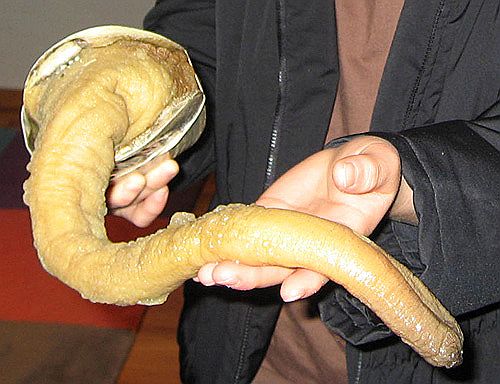
Dear ShyButIntrigued: I’m afraid it’s true. The clam you reference is called a Geoduck clam — pronounced “gooey-duck,” not “gee-oh-duck.” The Geoduck clam is a species of Panope generosa, a large saltwater clam native to the northern Pacific coasts of Canada and the United States. These clams sometimes live in excess of 100 years, residing limp and large deep, deep within the moist sand of ocean beaches.

They are very difficult to catch, but when you find yourself with one in hand, they as often as not become rigid, and ejaculate a viscous discharge that smells not unpleasantly of the ocean salt.

These remarkable creatures feed on smaller sea creatures, and, despite their peculiar appearance and their elusive quality, they are dug up and shipped to China, whereupon they are cooked and eaten with relish, like so many hotdogs.

The name “Geoduck” — pronounced, I repeat, “gooey-duck” — ostensibly has its origins in a Native American pidgin, called Chinook, and comes from the Chinook word for “to penetrate deeply.” Coincidentally enough, this word has penetrated the English language (albeit rather flaccidly) and has indeed, like the bivalve itself, found a curious kinship with the bearded clam.

As for Tom Jones, the answer is an emphatic No; it is not indicative of any underlying psycho-sexual issues — please don’t worry about that — and the only way I can explain the curious cross-connection you make is by something this:

Yeah, baby, yeah!


to pe

5 comments » | Philosophy, Reader Mail

Logical Fallacies

February 7th, 2010 — 8:23am

A reader writes:

Dear Ray: I’ve always been told it’s better to be shot at and missed than shit at and hit. While getting shit on obviously does suck, getting shot at means someone doesn’t like you enough to want to shoot at you in the first place. So is it really better?

Scatman

Dear Scatman: I’m afraid your question contains a logical fallacy which I cannot let pass by without at least partially fleshing out. But that doesn’t make it a total waste. You, sir, have committed the fallacy of insufficient feculence — not nearly as egregious as, for example, equivocating on the critical issue of pulling out.

I pray, sir, that this doesn’t sound like a load of crap to you, and please don’t cut me off before we finish our business here, but you simply cannot reasonably infer that “getting shot at [and missed] means that someone doesn’t like you enough to want to shoot at you in the first place.” That’s just BS. It’s also hasty. And only an adversary epistemology advocates haste. In fact, the person shooting at you may very much want to put a slug in your guts, but he may just be a bad shot — for instance, because he has no stool upon which to rest his gun, or perhaps there’s too much movement in other ways.

In any case, the answer to your loaded question is unequivocal: it is indeed far better to be shot at and missed. And that’s no shit.

Follow up question:

Dear Ray: I read your response to Scatman, and I thought it was rock-solid advice. So I thought I’d write in with a question of my own, along somewhat similar lines:

Is it OK to put Germ X (or Purell) on my anus?

Red Button

Dear Red Button: Man, what is with you assholes? Your question is ambiguous — another logical fallacy. The answer depends upon what you mean by “OK.” If by “OK” you mean peculiar, then, yes, it is definitely “OK.” And if by “OK” you mean potentially pathophobic, misophobic, or otherwise inordinately concerned with personal hygiene, then, yes, it is definitely “OK.” But if by “OK” you mean perfectly safe, we run aground.

You see, ethyl alcohol, which is what these hand sanitizers use to kill germs, has indeed been known to cause problems: namely, the problem of pruritus, which, like writing a symphony (according to Brahms), “is no joke.” Pruritus is a rare side-effect, however, and so I imagine that your anus (insofar as I’m able to imagine your anus at all, which isn’t, thank heavens, much) will probably be, as you say, “OK.” If you do go that route, though, Ray recommends using an aloe-vitamin-e-moisturizing variety of sanitizer, thereby killing two birds with one stone. Why not?


5 comments » | Philosophy, epistemology

Proof Of God?

January 25th, 2010 — 12:08am

A reader writes:

Dear Harvey Ray: Is there proof of God? Can science prove that God doesn’t exist?

Signed,

Hopelessly Devoted

Dear Hopelessly Devoted: No, science cannot. In fact, nothing can. Yet we can be certain that God doesn’t exist — by virtue of the very nature of proof.

The meaning of proof precludes proving something for which there is no evidence.

God is primarily of metaphysical and ethical import. Proof, on the other hand, is epistemological.

Proof is an overwhelming preponderance of evidence that admits no alternative.

Proof, by definition, requires evidence. Indeed, proof is evidence.

For this reason, the attempt to prove something for which there is no evidence is a contradiction in terms. The philosophy of science presupposes this principle, but historically, up to the present day, it’s been poorly defended.

You’ve no doubt heard the platitude: “You can’t prove a negative.”

The reason this statement contains a kernel of truth is that proof requires data, as opposed to an absence of data. And that is why the burden of proof falls upon the person making the claim.

If, for example, you claim that little green men exist inside the human brain, and that these green men are responsible, through an intricate process of lever-pulling, for human consciousness, it is you who must prove this — by providing data — and not us who must disprove it.

What you’re really referring to in your excellent question is a thing epistemologists call evidentialism, or the law of the arbitrary.

If the onus of proof were on me, for instance, to prove that these little green men didn’t exist, what, may I ask, do you think that would entail?

I’ll tell you:

Among other things, it would entail that anyone could say whatever he wanted about anything, regardless of data, and I’d have to spend the rest of my life trying to prove him wrong without any data, while he sat back and fabricated more arbitrary claims. And, indeed, many people do just that.

Fortunately for the human race, this is not how the reasoning process actually works.

The proper response to these claims is simply to dismiss them categorically for what they actually are: neither true nor false, but whimsical — that is, arbitrary — until some hard evidence is put forth. But the evidence must come first, before the claim.

That is what you must always remember.

Evidence constitutes proof.

Merely claiming does not constitute evidence; that’s too easy.

Thus, if you claim God or if you claim green men, it is you, not me, who must produce the data.

Epistemologically, there’s no significant difference between green men, God, the Great Spirit, or, for that matter, Grendel.

Which is why for the mystically inclined, fideism is the best bet, although fideism too runs spectacularly aground, but in other ways, less epistemolgic, perhaps, but clearly more dramatic.


2 comments » | Philosophy, epistemology, metaphysics

Global Warming

January 10th, 2010 — 9:00am

Politically, global warming and climate change have little if anything to do with climate science, and the fact that this subject has become such an overwhelming political issue is a fine testament to how poorly the world understands the legitimate functions of government, and why those functions are legitimate.

Indeed, it turns out that the whole anthropogenic global warming (AGW) position can be easily defused without any reference to science at all, because the error, at root, is epistemological.

The truth about global warming which many don’t want to hear is that it’s become so polarized only because it’s turned political. The essentials of the subject have thereby been swallowed up in a murky ocean of misinformation, equivocation, and propaganda.

Let us then start by defining terms:

Statism is concentrated state authority; it refers to a government that believes it has legitimate power to any extent over individual rights and freedom of trade.

Opposition to laissez-faire capitalism derives in part from ethics, but even more fundamentally from the science of epistemology.

Ethically the fundamental political question is this: are humans free by nature?

The answer to that depends upon the answer to an even deeper question: why (if at all) are humans free by nature?

And the answer to that is epistemologic.

The human brain – to address the latter query first – is individuated and rational by nature; because of this, man by nature possesses the faculty of choice.

Rationality is choice.

And choice presupposes the freedom to choose. This is the locus of the inseparable, indivisible link between reason and rights. Ultimately it is only the individual who can exercise the power of volition, or not. Government bureaus cannot. The state cannot. The collective cannot. Only the individuals who make up these entities.

If humans did not possess the faculty of choice, humans would be neither moral nor immoral but amoral, just as animals for this very reason are amoral.

But human action is chosen.

This, then, is what finally gives rise to the fact of human freedom as an epistemological necessity.

It’s also what it means to say that humans are free by nature: we are born with a cognitive faculty that gives us the power of choice; since this faculty is the primary method by which we thrive and keep ourselves alive, we must (therefore) be left free to exercise that faculty — and leave others likewise free.

This is a form of contractarianism.

Please note that this is not just some esoteric theory on how human freedom could conceivably be defended: the rights of each individual are demonstrably rooted in man’s cognitive quiddity – and for this precise reason, human freedom without an accurate and thorough understanding of man’s epistemologic nature can never be fully understood.
Or defended.

In the words of Samuel Adams:

“Rights are evident branches of, rather than deductions from, the duty of self-preservation, commonly called the first law of nature.”

And Claude Fredrich Bastiat:

“For what are our faculties but the extension of our individuality? And what is property but an extension of our faculties? … Man can live and satisfy his wants only by ceaseless labor, and by the ceaseless application of his faculties to natural resources.”

It is precisely the lack of epistemological grounding that has made rights and therefore human freedom vulnerable throughout all of history.

The evolution of the human brain created rights; it happened at the exact moment when this same evolution created a rational animal called a human being – which is to say, when nature created the capacity of free will.

Philosophy, then, being the most general science, unifies facts from all disciplines into an indivisible whole.

Thus, without proper philosophical underpinnings, scientific facts, no matter how airtight they are, remain unincorporated.

It is this point that provides us with the real and final connection between global warming and individual rights; for the provenance of rights, including private property rights and the freedom to trade that property, is found ultimately in man’s freedom of will, and it is only statist politics – also known as coercive government – that can with impunity negate the individual’s natural rights.

It does so through force, either directly (as in physical expropriation or imprisonment), or indirectly (as in compulsory taxation or fines).

The statist politics that the AGW position explicitly calls for are in this way antithetical to the methods by which the human brain and the human species properly functions and flourishes.

That is the fundamental argument against statism, in any of its multifarious guises. It is a foolproof argument, and it is the first and strongest line of defense: because each and every individual is free by nature, we are free to, in Adam Smith’s words, “truck, barter, and exchange.”

But there’s much more to it than this.

It must first of all never be forgotten that the philosophy of science is only a species of philosophy proper.

This has crucial ramifications.

Science is the systematic gathering of data through observation and reason.

Science is built upon knowledge, and knowledge is built upon reason.

Reason derives from the nature of the human mind, for man is the rational animal.

Epistemology – one of the two main branches of philosophy – is the science of knowledge.
Epistemology, therefore, studies the nature of reason.

In this way, all science is hierarchically dependent upon epistemology.

In the realm of human conviction, there exists at any given time only three primary alternatives: possible, probable, and certain.

Possible is when some evidence exists, but not much.

Probable is when a lot of evidence exists, but not all.

Certain is when the evidence is so overwhelming that no other conclusion is possible.

Obviously, then, what constitutes possible, probable, or certain is the amount of evidence and the context of knowledge within which that evidence is found.

To conclude certain, or even “over 99 percent certain,” to quote James Hansen of NASA, requires a sufficient knowledge of all relevant data and all potentially relevant data.

This is as true in a scientific laboratory as it is in a court of law.

It means that nothing – the complexity of clouds, for instance, or aerosols, deep ocean currents, cosmic rays, sun spots, et cetera – nothing is poorly understood, or insufficiently understood.

It means that the science has culminated to such a degree that our knowledge of it is complete or near-complete – so much so, at any rate, that there is essentially very little left to learn.

It means that because the evidence is so great, the conclusion admits no doubt.

It means, moreover, that the data-gathering process is not biased or influenced in any way by anything extracurricular, like activism.

Such is the nature of certainty.

From an epistemological standpoint, certainty means absolute.

And yet it’s many of these same AGW scientists who, today, under the insidious influence of postmodernism, assure us that there are no absolutes in science – “science doesn’t deal in truth, but only likelihood,” to quote another NASA scientist, Gavin Schmidt.

Truth is only relative, you see.

Quantum physics and thermodynamics have “proven” that the only certainty is that nothing is certain; definitions are purely a question of semantics; a unified philosophy is “circular reasoning” (or, at best, “system-building”); all moral law and all social law is subjective and unprovable.

The mind, in short, cannot know anything for certain. Yet AGW is virtually certain.
These are all epistemological assertions.

Syllogistically, the entire anthropogenic global warming position can be recapitulated in this way:

Global warming is man-made. Man is ruled by governments. Therefore, government bureaus, centralized planning committees, and more laws are the only solution.

In philosophy, this is called a non-sequitur.

It does not follow.

It’s far too hasty.

Please read Chapter 15 of my book to find out why.


13 comments » | Global Warming, Philosophy, Political philosophy, Skepticism, environmentalism, epistemology, postmodernism

The Difference Between a Cynic and a Skeptic

January 5th, 2010 — 9:08am

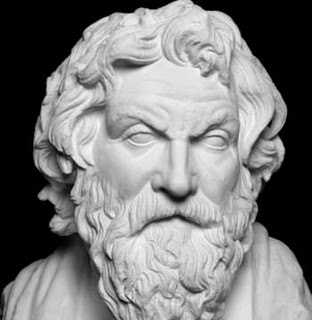
Antisthenes: the first cynic

The difference between the cynic and the skeptic is the difference between epistemology and ethics. It is the difference between brain and body.

Skepticism is an epistemological word. Cynicism is ethical.

Epistemology is the branch of philosophy that deals with knowledge.

Ethics is the branch of philosophy that deals with morality.

The Greek word skopein – from which the English word scope derives – means “to observe, aim at, examine.” It is related to the Greek skeptesthai, which means “to look out.” Skepsis and skeptikos are also both Greek and mean “to look; to enquire; to aim.” Those are the etymological roots of the word sceptic.

Sceptic – or if you’re in the United States, skeptic, the difference purely one of form and not substance – has its origins in the Ancient Greek thinkers who developed arguments which purport to show that knowledge is either impossible (Academic Scepticism) or that there is never sufficient data to tell if knowledge is possible (Pyrrhonian Scepticism).

Academic Scepticism rejects certainty but accepts degrees of probability. In this sense, Academic Scepticism anticipates elements of present-day quantum theory. The Academic Sceptics rejected certainty on the grounds that our senses (from which all knowledge ultimately derives) are unreliable and reason therefore is unreliable since, say the Academic Sceptics, we can find no guaranteed standard by which to gauge whether our convictions are true. This claim rests upon the notion that humans can never know anything that is absolutely false.

The roots of Academic Scepticism are found in Socrates famous apothegm: “All I know is that I know nothing.” The word “Academic” in “Academic Scepticism” refers to Plato’s Academy, third century B.C.

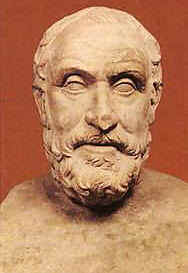
At around this same time, a fellow by the name of Pyrrho of Elis (c.360-275 B.C.), who was connected with the Methodic School of Medicine in Alexandria, founded a school, which soon came to be known as Pyrrhonian Scepticism. Pyrrho’s followers – most notably a loyal student named Timon (c.315-225 B.C.) – were called Pyrrhonists. None of Pyrrho’s actual writings have survived, and the theoretical formulation of his philosophy comes mainly from a man named Aenesidemus (c.100-40 B.C.).

The essential difference between these two schools of Ancient Greek scepticism is this:

The Pyrrhonists regarded even the claim “I know only that I know nothing” as claiming too much knowledge. There’s even a legend that Pyrrho himself refused to make a definitive judgment of knowledge even if “chariots were about to strike him dead,” and his students purportedly rescued him a number of different times because he refused to make commitments.

Pyrrho of Elis

To this day the term Pyrrhonist is synonymous with the term sceptic, which is also synonymous with the term agnostic (a meaning “without”; gnosis meaning “knowledge”).

It’s perhaps worth pointing out as well that the word agnostic in this context was, according to the Oxford English Dictionary, coined by Thomas Henry Huxley, in the spring of 1869, at a party, in which there was reportedly “much licking and sucking.” According to R. H. Hutton, who was there: “Huxley took it from St. Paul’s mention of the altar to ‘the Unknown God.’”

In truth, however, the word agnostic was most likely first used by a woman named Isabel Arundell, in a letter to Huxley. Huxley stole it from and gave her no credit.

The Oxford English Dictionary (Unabridged, 2004) lists four meanings of the term sceptic, which are as follows:

1. one who, like Pyrrho and his followers in Greek antiquity, doubts the possibility of real knowledge of any kind; one who holds that there are no adequate grounds for certainty. Example: “I am apt to think there never yet has really been such a monster in the world as a sceptic” (Tucker, 1768).

2. one who doubts the validity of what claims to be knowledge … popularly, one who maintains a doubting attitude with reference to some particular question or statement; one who is habitually inclined to doubt rather than to believe any assertion or apparent fact that comes before him. Example: “If every sceptic in Theology may teach his follies, there can be no religion” (Samuel Johnson, 1779).

3. one who doubts without absolutely denying the truth of the Christian religion or important party of it; loosely, an unbeliever in Christianity. Example: “In listening to the arguments of a sceptic, you are breathing a poisonous air” (R.B. Girdlestone, 1863).

4. occasionally, from its etymological sense: a truth seeker; an inquirer who has not yet arrived at definite conclusions. Example: “A sceptic, then, is one who shades his eyes in order to look steadfastly at a thing.” (M.D. Conway, 1870).

The anthropogenic global warming debate has catapulted this latter definition to the forefront, yet many purists, who know the philosophical roots of the word scepticism, are not always comfortable using it in this way — mainly because it’s so at odds with the philosophical meaning of the term. Scepticism has over 2,000 years of heavy philosophical baggage, and to call yourself a sceptic in the philosophical sense entails much more than one “who shades his eyes in order to look steadfastly at a thing.”

Language, however, as everyone knows, is a living, breathing organism which will and properly should evolve, and it would be very bad to say that sceptic in this latter sense is incorrect. And yet there is another word, more precise and less laden: Evidentialism.

True scepticism — which is to say, agnosticism, which is to say, Pyrrhonism — rejects the possibility of all knowledge, and yet it is precisely this that the scientist seeks, and finds: knowledge. What is knowledge?

Knowledge is the apprehension of reality based upon observation and reason; reason is the uniquely human faculty of awareness, the apparatus of identification, differentiation, and incorporation. Knowledge is truth, and truth is the accurate identification of reality. Veritas est adaequatio rei et intellectus. Truth is the equation of thing and intellect.

For example, when the child grasps that 1 unit combined with 2 other units makes a total of 3 units, that child has discovered a truth. She has gained knowledge. The philosophical sceptic rejects this elementary fact.

The philosophical sceptic is defined by three words: “I don’t know.”

The scientific sceptic, on the other hand, is defined by rational inquiry — someone who investigates with a disposition to be persuaded and yet does not (in the words of perhaps the most famous sceptical inquirer of them all) “insensibly twist facts to fit theories, instead of twisting theories to fit facts.”

A cynic, on the other hand, is someone who doesn’t believe goodness is possible.

Cynicism is a moral concept, not epistemologic.

The word originated with a Greek fellow by the name of Antisthenes (not to be confused with Antihistamines, which are something else), who was once a student of Socrates.

Antisthenes had a notorious contempt for human merit and human pleasure, and that is why to this day the word cynic denotes a sneer.

The cynic rejects goodness; the skeptic rejects knowledge.

Both words, it should also be noted, do, however, have one very important thing in common: from a philosophical standpoint, they’re each stupendously incorrect.

This article first appeared, in slightly different form, at Dr. Jennifer Marohasy’s website.

The comments there are well worth reading.


3 comments » | Philosophy, Skepticism, epistemology

A Brief History Of Environmentalism

January 3rd, 2010 — 12:42am

Environmentalism has so thoroughly permeated world culture that the saving-the-planet rhetoric is accepted even by those who don’t really regard themselves as dyed-in-the-skein environmentalists. It is taught as holy writ in public schools, and it’s espoused by poets, priests, and politicians alike.

This monstrous ideology would, given the first opportunity, destroy humankind, a fact of which the leaders of this movement make no secret.

It is therefore of great importance to expose this ideology for what it actually is: a neo-Marxist philosophy that masquerades as something benevolent and life-affirming, but which in reality explicitly calls for humans to be subordinated to nature, via an elite bureau of centralized planners who, as you would suspect, are the ones that get to decide for the rest of us how we must live.

It was Jean-Jacques Rousseau who first began propounding the immanent-goodness-of-nature-untouched-by-man ideology. Rousseau also deplored “the corrupting influence of reason, culture, and civilization.” In fact, Rousseau, like many of our current politicians, also preached economic egalitarianism and tribal democracy, the “collective will,” and the primacy of the group over the individual. In a great many ways, Rousseau is the founder of present-day environmentalism.

His so-called Eden Premise was picked up by all the pantheists and transcendentalists, such as Henry David Thoreau, John Muir (founder of Sierra Club), Aldo Leopold (who helped found the Wilderness Society), and of course the propagandist Rachel Carson.

When, in 1860, Thoreau wrote that forests untouched by humans grow toward “the greatest regularity and harmony,” he inadvertently changed the life of a biologist named George Perkins Marsh, who in 1864 wrote a book called Man and Nature. In this extraordinarily influential book, George Marsh also tried to convince us that, absent humans, mother nature and her processes work in perfect harmony:

“Man” (said Marsh) “is everywhere a disturbing agent. Wherever he plants his foot, the harmonies of nature are turned to discord…. [Humans] are brute destroyers … [Humans] destroy the balance which nature had established.”

“But” (he continued) “nature avenges herself upon the intruder, [bringing humans] deprivation, barbarism, and perhaps even extinction.”

Just as Thoreau influenced George Marsh, so George Marsh influenced a man named Gifford Pinchot, and also a man named John Muir.

Gifford Pinchot was a utilitarian who loathed private ownership of natural resources. He was also the first chief of the United States Forest Service under Republican President Theodore Roosevelt.

Gifford Pinchot was a collectivist who believed in sacrificing individuals and their property for the sake of “the greatest number.”

It was in large part because of Pinchot that the United States’ federal government increased its land holdings dramatically, so that today over one third of America is owned by the federal government — which holdings comprise over half of America’s known resources, including “a third of our oil, over 40 percent of salable timber and natural gas, and most of the nation’s coal, copper, silver, asbestos, lead, and other minerals.”

In his excellent account of American environmentalism, Philip Shabecoff says this:

“Pinchot wanted the forests managed for their usefulness, not for their beauty… He was not interested in preserving the natural landscape for its own sake.”

At the very least, Pinchot, a conservationist, was, however, still semi pro-human.

John Muir, on the other hand, Pinchot’s nemesis, was not pro-human. In fact, he was the diametric opposite.

It was John Muir, a Scottish immigrant, who introduced misanthropy into the environmental pseudo-philosophy, which misanthropy reigns supreme to this very day.

“How narrow we selfish, conceited creatures are in our sympathies!” said John Muir, also an unapologetic racist. “How blind to the rights of all the rest of creation! Well, I have precious little sympathy for the selfish propriety of civilized man, and if a war of races should occur between the wild beasts and Lord Man, I would be tempted to sympathize with the bears.”

From John Muir, it was only a short step to one Ernst Haeckel (1834 – 1919), a German zoologist, who told us that individuals don’t actually exist. Human individuals do not possess an individual consciousness, he said, because humans are only a part of a greater whole, and 1866 Haeckel coined that fated term “ecology,” which he defined as “the whole science of the relations of the organism to the environment.”

It was an Oxford botanist named A. G. Tansley who, in 1935, introduced the word “ecosystem.”

According to this same Tansley, individual entities don’t exist but are merely part of “the basic units of nature on the face of the earth.”

Aldo Leopold’s wildly popular Sand County Almanac was published in 1948. It preached “the pyramid of life,” and in order to preserve this pyramid, Leopold told us that federal governments must “enlarge the boundaries of the community to include soils, waters, plants, and animals [which] changes the role of Homo Sapiens from conqueror of the land-community to plain member and citizen of it.”

A Norwegian named Arne Naess (1913 – 2009) also believed that human individuals don’t actually exist. Only ecosystems do. It was Naess who first argued that the “shallow ecology,” as he called it, “of mainstream conservation groups” benefits humans too much. Thus, Naess began calling for “deep ecology” — i.e. “biospheric egalitarianism with the equal right [of all things] to live and blossom.”

These are just a small handful of the phrases and catchphrases that have now frozen into secular dogma, and which Rachel Carson, with her puerile pen, brought to the mewling masses. Her book Silent Spring opens like this:

There once was a town in the heart of America where all life seemed to live in harmony with its surroundings. The town lay in the midst of a checkerboard of prosperous farms, with fields of grain and hillsides of orchard where, in spring, white clouds of bloom drifted above the fields. In autumn, oak and maple and birch set up a blaze of color that flamed and flickered across a backdrop of pines. Then foxes barked in the hills and deer silently crossed the fields, half hidden in the mists of the fall morning… The town is almost devoid of robins and starlings; chickadees have not been present for two years, and this year the cardinals are gone too… ‘Will they ever come back?’ the children ask, and I do not have the answer.

Most sane people see through this pablum like a fishnet. It’s the insane people who have swallowed it hook, line, and sinker.

The rest, of course, is history.


17 comments » | Philosophy, environmentalism

Importance Of Philosophy

December 29th, 2009 — 8:34am

Philosophy is an inescapable fact of human life because humans, as John Milton said, spend the better part of their lives inside their own minds.

Humans, in other words, think to survive, and life, therefore, is not primarily physical. It’s psychological.

Philosophy is indispensable because the fundamentals of thought are entirely philosophical. Any attempt to deny the necessity of philosophy must use philosophy to deny its necessity.

Whether you’re an American thinker or a Greek thinker, whether you’re an Asian thinker, African, or Australian thinker — it doesn’t matter — there’s no getting around the necessity of thought.

Thinking is what unites us all.

It’s been noted that philosophy can be distinguished from all the other sciences and disciplines by this one thing:

To do philosophy, all that’s required is the human brain and the senses to feed that brain. That’s how you can tell philosophy from every other science.

In the words of one modern-day neo-Thomist: “Metaphysics does not depend upon any delicate instrumentation.”

Philosophy requires no telescopes, no microscopes, no computers, or computer models. It requires neither paintbrush, nor piano; neither hammer-and-chisel, nor brick-and-mortar.

Philosophy can’t establish scientific laws, neither does it deal with math, or experiments, or so-called systems.

Philosophy does, however, possess veto power over all these things and more, because philosophy forms the foundations upon which these things and all others are built.

Of human disciplines, therefore, philosophy is the lowest common denominator.

That is the way in which philosophy brings together every aspect of human life.

Philosophy matters.

Comment » | Philosophy, epistemology

Time Travel

December 19th, 2009 — 8:22pm

A reader writes:

Dear Ray Harvey: Could there be time travelers from the future among us and if so, does that mean a time machine has already been invented?

Dear Anonymous: Your question is a fascinating one. Actually, it reminds me of a similar query people used to put to me all the time:

“Do we have a fungus among us?”

I’ll forgo the latter one (for now), but the answer to your question is no; there could not be time travelers from the future among us.

The reason this is so is that time doesn’t actually exist. In a literal sense, there is no such thing as “the future.” The future simply isn’t there. (As Gertrude Stein once said of Oakland, California: “There is no there there.”)

What exists is motion; what also exists are things in motion.

Time, by definition, is the measurement of motion. Thus time is an epistemological word, not metaphysical. It refers to quantification. “Time must have a stop,” said Shakespeare, in Henry the Fourth. Motion, however, is eternal.

The universe has been described as “out of time” because time doesn’t exist independently of man.

Time, therefore, like calculus, is only a system of measurement. What does it measure? It measures motion, such as planetary revolutions around the sun.

There’s a venerable old saying, with which I happen to (more or less) agree: “It’s not the size of the rise that satisfies; it’s the motion of the ocean that creates the commotion.” What this beautiful and time-tested apothegm means to me is that in the absence of human beings, there’s no size or space; there’s no order, no disorder, no math, no future, no past, no present, no alpha or omega, no treehuggers, no propaganda. There’s only the motion of the ocean.

If, however, there were time travelers from the future among us, your surmise would indeed be correct: a time machine would have already been invented. When?

“Who knows where the wind goes when it is calm?”

Said Voltaire.


2 comments » | Philosophy

Can Morality Exist Without God?

December 10th, 2009 — 8:16pm

right-way-wrong-way1

Ethics is the study of moral philosophy.

Morality is the science of human action.

First comes metaphysics, then epistemology, and then ethics.

Those are the big three of philosophy. Of them, ethics is arguably the most complicated.

Metaphysics and epistemology have a direct and immediate bearing on our most fundamental ethical questions: namely, is there such a thing as morality at all, and if so what is it made of? Can we apprehend it?

For if we didn’t actually exist — or if we did exist but weren’t actually able to know anything — there could be no question of good or bad human behavior.

We must then ask next: what, if anything, within the human condition gives rise to good and bad behavior?

And why do we act at all? Is there some one phenomena we can pinpoint that unites all these things?

The answer is yes, there is something we can pinpoint, and that something is called life.

Life is the common denominator that unites existence (metaphysics), consciousness (epistemology), and human action (ethics).

Science defines life, in part, as “any kind of self-motivated, growth or development-directed behavior that is able to respond to stimuli.”

To maintain itself, life of every kind requires action.

Death, the opposite of life, is therefore the opposite of action as well: death is inertia.

Death gives life meaning in the sense that death is what life constantly strives against.

In order to live, humans must act. But not only that — humans must act in a certain way: specifically, a way that fosters life.

Quoting philosopher (and beekeeper) Richard Taylor:

“The things that nourish and give warmth and enhance life are deemed good, and those that frustrate and threaten are deemed bad.”

In this light, the moral is that which promotes one’s welfare; the immoral is that which is self-destructive.

Some philosophers, like the egregious Kurt Baier, do not approve of equating this viewpoint with morality and instead opt to call it something else: prudential.

The reason these philosophers oppose the idea of so-called prudential morality is that they all, without exception, start with a spectacularly false and deadly assumption: namely, they believe that morality must by definition be altruistic.

This assumption effectively puts happiness and well-being far out of reach and opens the doors wide for all manner of faith-based ethics and arbitrary decree, each one ultimately and equally unverifiable.

From my viewpoint, however (i.e. the prudential perspective), morality is only a means to an end: the individual and her well-being are primary, and morality is the standard by which she achieves well-being.

Thus, rather than saying “That action is immoral, or evil,” it’s more accurate to describe it this way: “That action will harm you over time.”

Such is the nature of prudential ethics.

Since the dawn of humankind, moral philosophy has been dominated by religion of one kind or another – so much so that the overwhelming preponderance of people in world history have been (mis)led into believing that morality cannot exist if God is dead.

It is a grim irony indeed, therefore, to discover after all these millennia that morality not only can exist if you kill God, but that morality can only exist if you kill God.

In the words of the late Walter G. Everett, philosopher:

Moral law is just as real as human nature, within which it has its existence. Strange, indeed, if man alone of all living beings could realize his highest welfare in disregard of the principles of his own nature! And this nature, we must remember, is what it is — is always concrete and definite. Indeed the sceptic nowhere else assumes the absence of principles through obedience to which the highest form of life can be attained. He does not assume that a lily, which requires abundant moisture and rich soil, could grow on and arid rock, nor that a polar bear could flourish in a tropical jungle. No less certain than would be the failure of such attempts, must be the failure of man to realize, in disregard of the laws of his being, the values of which he is capable. The structure of man’s nature, as conscious and spiritual, grounds laws just as real as those of his physical life, and just as truly objective (Walter G. Everett, Moral Values, 1918).

Man is the rational animal. Humans are the ethical primate, the reasoning brain the thing that distinguishes the human essence. As such, human life requires very specific things, not all of which — fulfillment and joy, for instance — are material (like food and water).

These “things” are what philosophers call values.

A value, by definition, is a thing that you want, or a thing that want to hold onto.

“When we speak of values we do so under the inspiration and from the perspective of life,” said Nietzsche.

So. Life requires values — whether shelter, love, sex, transportation, medicine, money, laughter, literature, food, drink, or anything else — and these, in turn, to obtain and maintain require action.

Thus, life requires action.

That is our first ethical crux.

As you can see, it is a crux that derives from the nature of human life here on earth, without any reference whatsoever to God.

Aristotle asked:

“What is the good?” (in his language agathon).

That to him was the foundational question of all ethics.

And in his meticulously reasoned treatise on the subject — Nicomachean Ethics — he answers in no uncertain terms:

“We may define agathon as that for the sake of which everything else is done.”

The good, then, is the end object of an action; the good is the goal.

And here we come to our second ethical crux:

The locus of the good is found in goal-directed behavior, the pursuit of values.

In philosophical terms, goal-directed behavior is also known as teleology.

And that is why certain ethical systems, like those of Mr. Aristotle and Mr. Spinoza, among others, are sometimes described as “thoroughly teleological.”

It is a term that refers to the goal-directed nature of all life, and here specifically to the fact that human good and human evil reside in the very nature of goal-directed action (or in the case of evil, its lack), which in turn resides in the nature of human survival.

Life requires action, yes, but to be more precise, life requires action that is directed toward certain life-sustaining values, which we know as goals.

All entities, sentient or insentient, have a specific essence, or nature. Only living beings, however, can pursue values, and they do so for one reason alone: staying alive.

So. The pursuit of life is teleological action. Life is goal-directed behavior.

That formulation is entirely Aristotelian, yet it can easily be validated without any reference at all to Aristotle: for we can see all around us in nature, and in ourselves, that life requires goal-directed action.

Indeed, as mentioned previously, science defines life as, in part, “goal-directed behavior.”

The essence (or identity) of a living thing determines how that particular thing must behave in order to maintain its life.

“In this way, a good X is that X which fulfills its nature.”

This is also a thoroughly Aristotelian formulation.

It is also why it is not inappropriate to say, for instance: “That sturdy cottonwood is a good tree.”

Or: “That fast greyhound is a good greyhound.”

And conversely: “That lame horse is a bad horse.”

The cottonwood and the greyhound are good because they have fulfilled their nature; the lame horse is bad because it has not.

These, though, are not moral pronouncements, not quite.

There is in them, however, a close connection to morality, and for this reason I believe that even a religious person can glimpse here, at last, how it is that good and evil are indeed secular and rooted exclusively in life on earth.

The final component required for demonstrating morality as a human gauge by which we live in this natural world is the faculty of choice.

There can be no good or evil if there is no choice.

Life requires action: crux one.

The good is that which fulfills its nature: crux two.

Humans (a species that lives primarily by its reasoning brain) must choose to fulfill its nature: crux three.

And that is why humans, the rational animal, are also the ethical animal.

Choice is the sine-qua-non of moral philosophy because chosen action is the exact opposite of automatic action, and automatic action is neither moral nor immoral but amoral: blame or praise can only belong to an act that is willed.

Reason must be willed.

As a matter of fact, the very locus of choice is in the uniquely human faculty of reason.

“Reason,” said John Milton, “is also choice.”

And:

“You have been given reason, which can distinguish between bad and good.”

Said Dante.

Reason does not operate instinctively. We choose to activate it, or not, and that choice determines all our others.

When we analyze will with all the tools that modern psychology brings us, we shall find ourselves pushed back to the level of attention or inattention as the seat of will. The effort which goes into the exercise of will is really effort of attention; the strain in willing is the effort to keep the consciousness clear, i.e. the strain of keeping attention focused (Rollo May, Love and Will, 1969).

And that, finally, is the answer the overwhelming question: “How can there be good and evil without God?”

Because whether God exists or doesn’t, the human brain does not operate instinctively. It needs a standard, a guide.

Which is precisely what morality provides.

Thought precedes action; action sustains life; and life, as Goethe taught us, is a process of valuing.

The process of valuing is the thing that grounds morality in this world, here and now.

Morality is required by the nature of the human brain itself.

Quoting G.H. von Wright:

The attributes, which go along with meaningful use of the phrase the good of ‘x’, may be called biological in a broad sense. They are used as attributes of being, of whom it is meaningful to say that they have life.

5 comments » | Philosophy, ethics

The Branches Of Philosophy

December 2nd, 2009 — 10:37pm

Three major branches grow upon the ancient tree of philosophy: metaphysics, epistemology, and ethics. From these three branches spring two secondary and one tertiary.

The two secondary limbs are politics, a sub-branch of ethics, and aesthetics (also known as art), a sub-branch of epistemology.

One limb alone grows from the sub-branch of politics, and that is called economics.

In the tradition of Greek philosophy, then, we may properly classify philosophy’s branches, in order of hierarchical importance, like so:

Metaphysics: the study of reality.

Epistemology: the study of knowledge.

Ethics: the study of human action.

Politics: the study of government.

Economics: the study of production and exchange.

Aesthetics: the study of art.

These are the six main branches of philosophy, none of which, incidentally, are luxuries but human necessities. (Note: up until the time of Rene Descartes, epistemology was called Logic.)

There are, however, in addition to these, a great many smaller limbs that grow on the tree of philosophy, a very partial listing of which might, in no particular order, look something like this:

Ontology: the branch of metaphysics that studies entities.

Philosophy of mind: the branch of epistemology that studies the putative dichotomy between brain and body and includes the soft science of psychology.

Philosophy of language: the branch of epistemology that studies linguistic meaning and linguistic evolution.

Philosophy of law: the branch of politics, and also ethics, that studies specific implementations of justice, rights, property, governmental procedure, and so on.

Philosophy of education: the branch of epistemology that studies the devilish intricacies of pedagogy.

Philosophy of mathematics: the branch of epistemology that studies critical problems raised by math.

Hermeneutics: the branch of aesthetics that studies textual interpretation.

Critical theory: the branch of ethics – and to some extent politics and aesthetics as well – that studies so-called underlying social practices.

Obviously this list is far from exhaustive, but a full compendiation here isn’t the point.

The point is this:

Each sub-branch of philosophy and each sub-sub-branch is a species of either metaphysics, epistemology, or ethics.

In the same way that philosophy forms the foundations of all knowledge, so metaphysics (the study of reality) forms the foundation of all philosophy.

All knowledge is built hierarchically, from the ground up. Thus, knowledge forms a unity wherein one thing leads logically to another, which leads to another, and so on.

In this way, knowledge is interwoven and therefore entirely contextual.

In the house of knowledge, there are many mansions, but it’s all built upon one foundation: and that foundation is philosophy.


Comment » | Philosophy

New Entries

Newest comments

  • Ray: Coming from someone who uses “Ugh” and “douche baggy” in the same breath, one can feel...
  • Ray: You’re preaching to the converted about nuclear energy: http://rayharvey.org/index....
  • Elijah: Ugh. I feel sorry for the guy who asked the question. That may be the most douche baggy answer I’ve...
  • Phil: I think your definition of a “clean” environment is suspect. I agree that Fossil Fuel has brought...
  • Ray: Actually, we can’t use all the coal in the US — there’s too much of it to use. Fossil fuel has...

Categories

Monthly Archives

Search


rayharvey.org Bio  |  Books  |  Contact  |  Blog

Back to top